

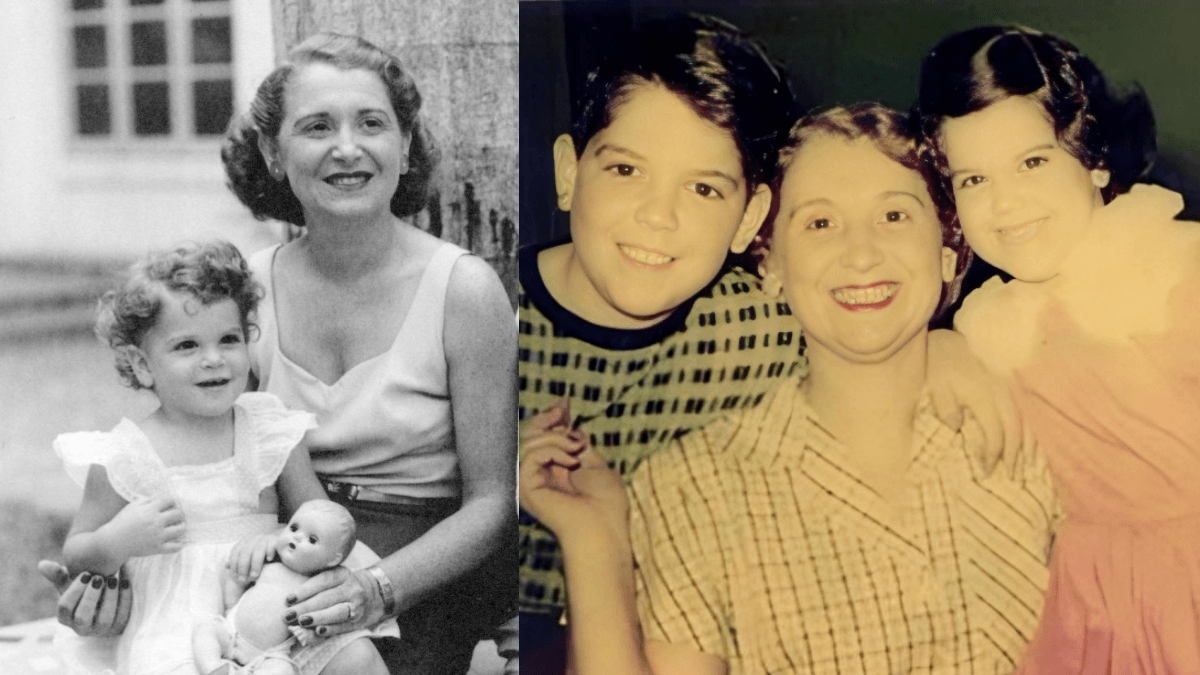
Born into a family in 1904, Henrietta Radner Dworkin began a lifestyle built through ancient America, where family responsibilities, social restrictions, and mundane obligations were important parts of her upbringing.
What stands out to me as I delve into families at the back of American popular culture is how the quietest person can usually have the strongest influence. Henrietta was no longer a climax seeker; She remained within history, helping to hold her tribe together like a strong house in the face of a storm. Her generation carried desire sparingly, like a lantern in one hand, while her Detroit circle of kinship and social existential pressures made her way Her legacy thus extends beyond television and pop culture, reflecting the hard edges of her time and the people she helped to form.
Henrietta Radner Marriage and Family Life
Henrietta married Herman Radner in 1937, situating her adult existence within the late 1930s, a period of uncertainty within broader American technology Their Radner home becomes part of a thriving Detroit global built by means of commercial enterprise research. Herman became a merchant and hotelier, and as husband and wife, his family’s wealth, stability, and tribal way of life gave the world a quirky domestic rhythm, and they formed a circle of kinship linked to the city.
Before becoming a mother, Henrietta worked as a crime reporter and was advertised as an aspiring ballet dancer. Her range, posture, precision, and attentive demeanor suggest a private appetite for the art of movement. The ballet dancer in her midst may also have lost the title, but its discipline must appear as domestic, domestic and silent, almost as if the choreography of family life and her paintings and profession thus formed some other part of the person behind the house.
Her home can feel defensive and anxious. Gilda Radner’s public biographies portray Henrietta as ubiquitous, emotionally complex, and occasionally hard to enjoy, but Bet reducing her to stereotypes may depart from her human side Many mothers of her generation loved with a communal grip as opposed to a soft, even faithful man, believing it husband, or and emotional complexity, that care explains the more difficult aspects of her home life.
| Detail | Information |
| Full Name | Henrietta Radner |
| Born | 1904 |
| Birth Family | Dworkin family |
| Birthplace/Connection | Detroit |
| Spouse | Herman Radner |
| Marriage Year | 1937 |
| Profession | Legal secretary |
| Other Interest | Aspiring ballet dancer |
| Daughter | Gilda Radner |
| Son | Michael Radner |
| Known For | Being part of Gilda Radner’s family story |
| Death | 1998 |
| Legacy | Remembered through family memories and biographical accounts |
Henrietta Radner Career and Finances
Henrietta’s career changed to focus on the work of a legal secretary, a role that required scale, confidentiality, and close attention to the elements. These are precious skills, although the situation may have seemed modest compared to my daughter’s later career. Unlike a public career, it would become part of the hidden capitals that supported her lifestyle and relative
Her budget appears to be tied to her family and Herman’s family and business accomplishments. The Redners became comfortable, and their solace gave the family a wonderful place in Detroit society, even if money no longer brought constant relief, and in fact wanted to replace furniture around old tensions. The public record does not identify Henrietta as an individual rights investor or entrepreneur. Her happiness becomes more intimate: protective of her family identity, which was later seen as normal through Gilda’s reputation.
Henrietta Radner’s Complex Personal Image
The relationship between Henrietta and Gilda gives her figure a permanent place in the famous own family history, although she herself never turned into a household name her loneliness contrasts with her enduring visibility, and such enduring power is rare. Some humans leave monuments, while others go through a circle of family stories that they remember over the years. In Henrietta’s case, her legacy grew quietly from the family around her.
Her private image is also shaped as a protest. She was described as intense and emotionally anxious, but she came from a loving, funny and touching family. To me, it makes her look more human than the simple banner posts: a person can be tough yet kind of, annoying yet trustworthy yet powerful and impactful. It has the effect of providing an explanation for why Henrietta remains part of the family’s history long after her life.
Final thoughts
Henrietta’s death in 1998 marked the end of a long existence that had been more than a century of fundamental change. Her story lives on through a circle of relative memory, archival photographs, biographical retellings and photographs that preserve her moments with young people, especially Gilda and Michael. These images showed a non-public international that eventually became public material, making Henrietta more than a footnote to her family history. It seems to be an axis around which a great deal of family existence passed, leaving a quiet trace in the common memory.
Her life stretched from generation to generation, as radio became commonplace in the twentieth century and the growing media culture of it. the center in no way requires that.
Frequently Asked Questions
Who was Henrietta Radner?
Henrietta Radner was the mother of comedian and actress Gilda Radner and Michael Radner’s mother.
When was Henrietta Radner born?
Henrietta Radner was born in 1904 into the Dworkin family in Detroit.
Who was Henrietta Radner married to?
She was married to Herman Radner in 1937.
What did Henrietta Radner do for a living?
She worked as a legal secretary and was also described in some accounts as an aspiring ballet dancer.
When did Henrietta Radner die?
Henrietta Radner died in 1998, after a long life spanning almost a century.
Who were Henrietta Radner’s children?
Her children included Gilda Radner and Michael Radner.
What is Henrietta Radner known for?
She is mainly remembered as part of the family story behind Gilda Radner and for the influence she had within her family.
