

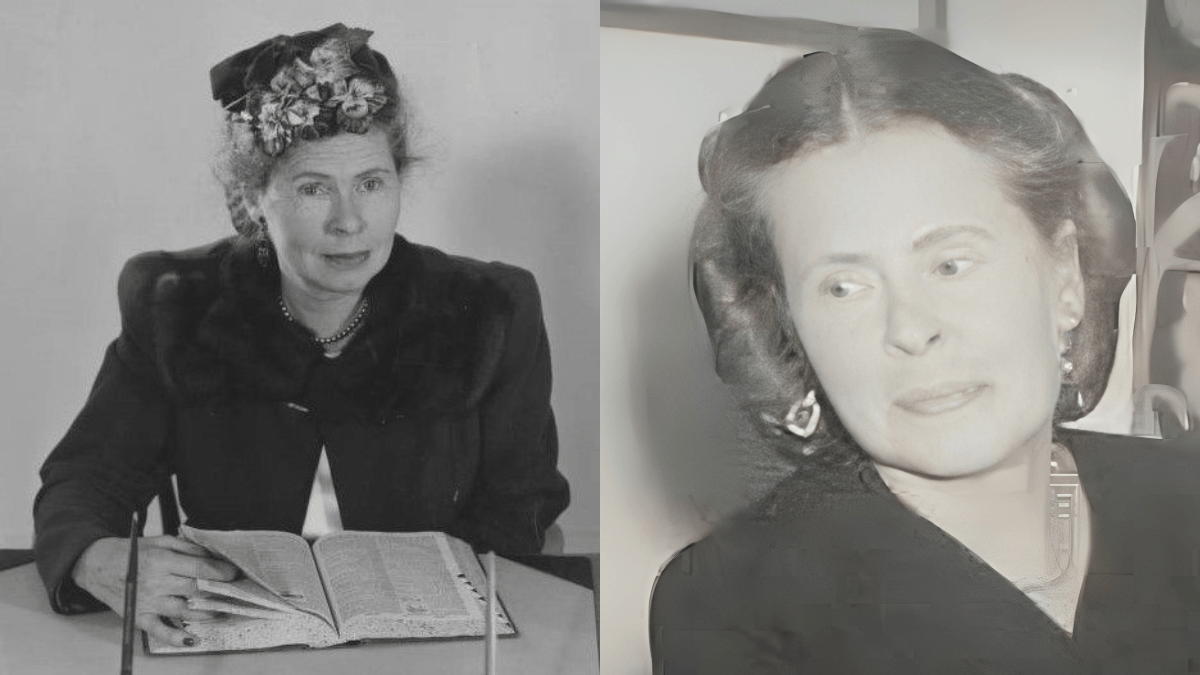
March 1892 begins the story of Catherine Vance Freeman, whose lifestyle is seen past her relationship with Fleet Admiral Chester W. Nimitz she became known as his spouse, yet additionally a daughter, mother of 4 children, a person with her own education, grewship, an education as R Freed. broker, and the mother of Mary M. Freeman. Her own family history became carefully linked to business, coastal existence, and alternative, generationally practical goals. In many ways, that placement connected the family to the wider world, where movement and even tides were part of normal life.
What makes her story particularly intriguing is the balance between her non-public existence and public lifestyle. Living in the brilliant shadow of a famous name would like to reduce her identity to 1 place without problems, but the information that remains shows a sweeping arc through adulthood, war, relocation and many generations. Her interest in language and literature reflects an education that gave her a stronger field within the changing world of the early 1900s. Her birthplace may seem different in all surviving statistics, but the date, own family relationships and overall history show uncanny consistency Her family carried its own size, weight and trajectory through a number of the most tumultuous years of the 20.
Catherine Vance Freeman’s Naval Marriage
On April 9, 1913, Catherine Vance Freeman married Chester William Nimitz, beginning a marriage that connected her personal lifestyle with much of public history. The latter’s reputation and biography surrounding Admiral may make their beginnings seem more obvious than they honestly were. In the early years, the future was more like long corridors and unlocked doors, where no companion knew exactly which way might lead
I find the image of a keel useful in examining Catherine’s celebration of their naval family. While Chester’s business rose like a storm, she helped balance below decks. Sea life required constant pace, agility and patience. Families certainly could not live in one place; They adjusted, adjusted, waited, reassured each other, and started once again. Catherine experienced that rhythm through years of remote assignments, general changes, and moving from region to region with her family. Her quiet work helped create balance around a stressful naval career and the commitments that came with reaching the highest ranks.
Their marriage also had the warmth of a real camaraderie. Chester appreciated her coordination as the couple shared sports activities, classical music and other outings. The shared interests and shared interests gave their domestic identity beyond that of a public admiral and his spouse. Later, Katherine’s story took another small turn when she married General James Thomas Lay in Washington D.C. 9 March 1945. Her second marriage suggests a girl who would survive through new relationships, diversity and changing circumstances rather than deal with Chester’s history.
| Category | Details |
| Full Name | Catherine Vance Freeman |
| Born | 22 March 1892 |
| Known For | Wife of Fleet Admiral Chester W. Nimitz |
| Profession | Music librarian |
| Education | University of California, Berkeley; Letters and Science, French |
| First Marriage | Chester William Nimitz, 9 April 1913 |
| Children | Four children |
| Second Marriage | Commander James Thomas Lay, 9 March 1945 |
| Second Marriage Location | Washington, D.C. |
| Interests | Language, books, sports, classical music |
| Family Background | Daughter of shipbroker Richard R. Freeman and Mary M. Freeman |
| Burial | Golden Gate National Cemetery, San Bruno |
| Legacy | Remembered through family history, military remembrance, and genealogical records |
Catherine Vance Freeman Education and Work
Catherine Vance Freeman’s public career may not have provided her with an expensive professional record, yet her portraits show that she became more than a solemn woman. As a music librarian, she pursued a career based on perseverance, organization, and discipline with an obvious love of knowledge. Careful work in libraries makes information profitably accessible, and her role connected that idea with sound, voices, and song. Her teaching also shows a lively mind. A yearbook in Berkeley placed a young woman in Letters and Science, analyzing French, taking elements of editorial interest and interest of the learned community. These tips show her interest in language, learning, and intellectual curiosity, giving her an educational leg past her husband’s career-related name .
Her professional successes are diffuse but enduring, especially given the demands of her family lifestyle and nomadic maritime lifestyle. She raised four children, adjusted to public scrutiny and helped maintain her home through constant change. She lived long enough to follow her son to emerge as a famous and respected naval officer, while her daughters forged careers of their own, and the family line for another generation as accomplishments come with medals while others serve quietly as cornerstones. Catherine’s story is largely of the 2d kind, where regular efforts, fields and care created a lasting time.
Catherine Vance Freeman’s Role in Family and Legacy
Catherine and Chester have their family life defined by a careful balance between public and private. While Chester won accolades, took command, rose to national prominence as a naval officer, Catherine’s approach became a much less glamorous but deeply significant one She helped keep the house stable as the theater changed, providing a sense of security for children, even a marriage thought never moved the family; Ultimately, it grew through gaining knowledge, service, and relationships that protected grandchildren.
The strong roots of their own family also extended beyond their immediate home. Through the shipbroker’s family tree, Catherine had a common connection with a maritime family, while education helped to connect different generations. Analysis, research and religious leadership became part of the boy’s life. I see her work as a deep-water bridge between a group of relatives, obligation and opportunity. The bridge connected humans and generations, and although some even criticized the design of such houses, it made it possible to cross difficult gaps that would have seemed impossible in any other context.
Final thoughts
Catherine’s story persists through a circle of story of relatives, military memorials, and local records, though her existence is not the title story in the current sense. Her name still appears in anniversary notes and genealogical information, although Chester Nimitz’s continuing obsession associates attention with her story That patience is important because few humans fade into the background after death as others move away and silhouettes form.
Her burial at Golden Gate National Cemetery in San Bruno puts her story at last on the map. I put it appropriately for a woman whose journey protected her carrier, her family, her education, and her transition. Her relaxation factor represents more than one area; It provides a physical sign of an existence that has passed through altered contexts during the closure associated with family and public commemoration.
FAQ About Catherine Vance Freeman
Who was Catherine Vance Freeman?
Catherine Vance Freeman was the wife of Fleet Admiral Chester W. Nimitz. She was also a mother, music librarian, and educated woman with her own life and interests.
When was Catherine Vance Freeman born?
Catherine Vance Freeman was born on 22 March 1892.
Who was Catherine Vance Freeman married to?
She married Chester William Nimitz on 9 April 1913. Later, she married Commander James Thomas Lay in 1945.
Did Catherine Vance Freeman have children?
Yes, Catherine and Chester Nimitz had four children. Her family life was an important part of her story.
Where was Catherine Vance Freeman buried?
Catherine Vance Freeman was buried at Golden Gate National Cemetery in San Bruno.
What was Catherine Vance Freeman’s profession?
She worked as a music librarian, a job that required organization, patience, and careful attention to music and records.
What did Catherine study?
Her education included French and Letters and Science at Berkeley, along with involvement in editorial and student society activities.
